Student Development and Faculty Enrichment Program on Emerging Technologies, Cloud Computing, and Research Translation
Event Date : 25th – 31st January 2026
Organizer : Department of Computer Science and Engineering, SET
The Assam Kaziranga University, Jorhat
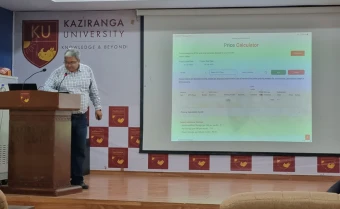
The Student Development Program (SDP) and Faculty Enrichment Program (FEP) on Emerging Technologies, Cloud Computing, and Research Translation were organized by the Department of Computer Science and Engineering, Assam Kaziranga University, from 25th January to 31st January 2026. The programs were conducted under the guidance of Dr. Sajal Saha to strengthen students’ technical foundations while simultaneously enriching faculty members with contemporary research, innovation, and funding perspectives.
The combined SDP–FEP initiative aimed to bridge the gap between academic learning and real-world technological applications, focusing on cloud computing, emerging digital technologies, and translational research practices.
Objectives of the SDP and FEP
- Enhance students’ practical understanding of cloud computing and emerging technologies
- Familiarize participants with modern computing paradigms such as virtualization and cloud architectures
- Orient faculty members toward translational research and Technology Readiness Levels (TRL)
- Promote awareness of government initiatives and funding agencies
- Encourage interdisciplinary collaboration
- Improve employability skills and research orientation
Target Audience
- B.Tech VI Semester Students
- Faculty Members
Resource Person
- Dr. Sajal Saha
Professor & Head, Department of CSE
Director – Product & Innovation
Department of Computer Science and Engineering
School of Engineering and Technology
Adamas University
Program Highlights
Student Development Program (SDP)
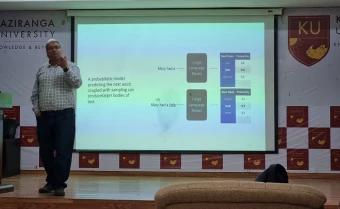
The Student Development Program provided in-depth exposure to modern cloud computing paradigms and their practical deployment. The sessions began with an overview of the need for cloud computing, highlighting the transition from traditional “buy and own” infrastructure models to the modern “subscribe and use” approach, enabling pay-as-you-go resource consumption and reduced capital expenditure.
Students were introduced to the fundamentals of virtualization, emphasizing how cloud platforms provide an illusion of infinite on-demand resources through abstraction layers.
Core technical concepts included virtualization technologies such as para-virtualization, virtual machine capabilities including live migration, and hardware-assisted virtualization support. Detailed discussions were conducted on cloud storage management, comparing block storage and object storage, along with an overview of different volume types such as SSD- and HDD-based storage optimized for performance, throughput, and cold access scenarios.
The program also covered cloud account and subscription models, explaining on-demand, reserved, and spot instances, along with Total Cost of Ownership (TCO) analysis to demonstrate the significant cost benefits of cloud adoption over on-premises infrastructure.
Students gained insights into cloud deployment architectures, including instance lifecycle management, image deployment, secure access mechanisms, and network configuration using Virtual Private Clouds (VPC), security groups, network ACLs, and internet gateways.
Practical aspects of infrastructure optimization were addressed through case studies comparing on-premises and cloud environments. Key cost optimization strategies such as right-sizing resources, leveraging reserved capacity, increasing elasticity by shutting down idle instances, and continuous monitoring using cloud-native tools were discussed in detail.
The SDP further introduced containerization platforms, focusing on Docker-based environments and container orchestration services, enabling scalable application deployment without managing underlying cluster infrastructure.
Overall, the SDP equipped students with a comprehensive understanding of cloud architectures, storage systems, deployment models, pricing strategies, security mechanisms, and containerized application platforms, thereby strengthening their readiness for industry practices and advanced academic projects.
Faculty Enrichment Program (FEP)
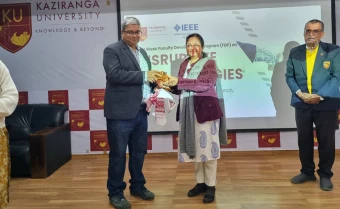
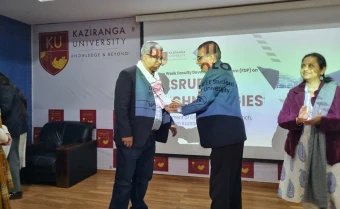
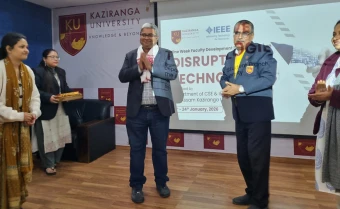
Dr. Sajal Saha had an interactive session with the faculty members of the Department of Computer Science and Engineering, along with Dr. Ripinjoy Gogoi, Dean of SET, The Assam Kaziranga University.
Dr. Saha discussed various longitudinal and translational research scopes with the faculty members. Encouraging faculty to work more on student startups and project-based learning was also a key focus of the discussion.
He elaborated on the importance of Technology Readiness Levels (TRL) in project proposals and shed light on various government-funded research projects. The discussion largely focused on emerging research scopes in Artificial Intelligence (AI), VLSI, and Quantum Technologies.
Dr. Saha also enlightened the faculty about applying for research projects under SERB, DST, and other funding bodies. Ideas on industrial research collaboration with organizations such as NERIST and NRL were also discussed.
The session concluded with a detailed discussion on funding opportunities from organizations such as SERB/ANRF, DST, MeitY, and other government agencies.
Program Outcomes
- Improved technical understanding of cloud platforms
- Enhanced research orientation among faculty members
- Increased awareness of research funding opportunities
- Promotion of interdisciplinary collaboration
- Motivation towards startups and applied research
Participant Feedback
The Student Development Program on Cloud Computing received overwhelmingly positive feedback from the participants, indicating a high level of satisfaction with both the content and delivery of the sessions.
Students appreciated the strong subject expertise of the resource person, clarity in explanation, and effective use of real-world examples, which significantly enhanced their understanding of cloud computing fundamentals. The interactive teaching approach and emphasis on conceptual clarity were highly appreciated.
Participants also highlighted the value of practical exposure and hands-on learning, stating that the program contributed meaningfully to their technical competence and career preparedness.
While a few students suggested incorporating additional live demonstrations and optimizing session duration, the overall feedback reflected excellent satisfaction levels. Most participants expressed their willingness to recommend similar programs for future batches.